
For decades, traditional college degrees were considered the most reliable path to professional success. Families encouraged students to pursue university education because degrees were closely connected to stable careers, social status, and financial security. In many countries, earning a degree was seen not only as an educational achievement but also as proof of intelligence, discipline, and long-term potential.
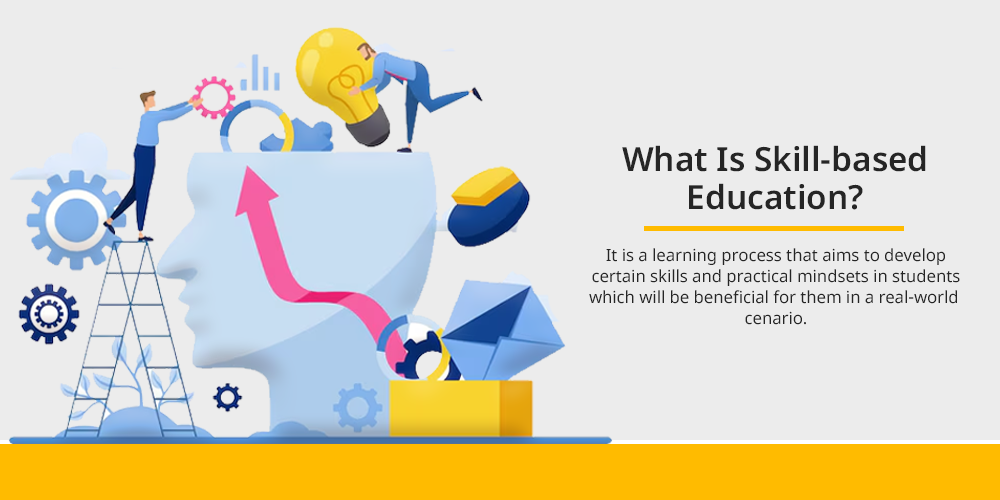
While higher education still remains valuable in many professions, the global job market has changed significantly. Employers are increasingly focusing on practical abilities, adaptability, and real-world problem-solving rather than academic qualifications alone. This shift has led to the rapid rise of skill-based education, where the emphasis is placed on learning specific, applicable skills instead of only completing formal degree programs.
Technology, online learning platforms, automation, and changing industry demands have all contributed to this transformation. Companies now operate in fast-moving environments where employees are expected to adapt quickly, learn continuously, and contribute practical value immediately. As a result, many organizations are becoming more interested in what people can do rather than where they studied.
This change does not mean traditional degrees have become useless. Fields such as medicine, law, engineering, and scientific research still depend heavily on structured academic education. However, across many industries, practical skills are gaining equal or even greater importance than formal educational credentials.
The rise of skill-based education is reshaping how students learn, how companies hire, and how professionals build careers in the modern world.
Employers Increasingly Value Practical Skills Over Academic Credentials
One of the biggest reasons for the growth of skill-based education is the changing nature of hiring practices. In the past, degrees often acted as the primary qualification for employment. Employers used university credentials as proof that candidates possessed knowledge and discipline. However, many companies eventually realized that academic qualifications alone do not always reflect workplace readiness.
A person may graduate with excellent grades yet struggle with communication, teamwork, problem-solving, or practical application of knowledge. At the same time, someone without a prestigious degree may possess strong technical skills, creativity, and real-world experience that directly benefit organizations.
This realization has become especially visible in industries connected to technology and digital work. Software development, digital marketing, graphic design, content creation, video production, data analysis, and social media management are examples of fields where practical portfolios often matter more than academic backgrounds.
Employers increasingly ask candidates to demonstrate their abilities through projects, assignments, or work samples instead of relying only on certificates. A programmer may be evaluated based on applications they have built, while a designer may be judged through a portfolio of creative work. In these situations, practical competence becomes more important than theoretical knowledge alone.
The growth of startups has also accelerated this trend. Startups often operate in highly competitive environments where speed, adaptability, and innovation matter significantly. They usually prioritize candidates who can contribute immediately rather than individuals who possess only academic qualifications without practical exposure.
Another major factor is the speed of technological change. Traditional educational systems sometimes struggle to update their curricula quickly enough to match evolving industries. A university program designed several years ago may not fully reflect current workplace technologies or market demands.
Skill-based learning, however, can adapt more rapidly. Online platforms, workshops, boot camps, and certification programs frequently update their content to match industry trends. This flexibility allows learners to acquire relevant knowledge faster than many traditional systems can provide.
Remote work and freelancing have also increased the importance of demonstrable skills. Clients hiring freelancers globally often focus on portfolios, reviews, and practical results rather than degrees. A content writer, video editor, or app developer may secure international projects entirely based on skill and performance.
This shift is particularly important for people who may not have access to expensive higher education. Skill-based education creates opportunities for learners from different economic and social backgrounds to compete professionally through talent and effort rather than institutional privilege alone.
Online Learning and Technology Have Made Skill Development More Accessible
The rise of digital education has transformed access to learning worldwide. Earlier, acquiring specialized knowledge often required attending universities or training centers physically. Today, millions of people can learn valuable skills from home through online courses, tutorials, workshops, and interactive platforms.
This accessibility has played a major role in the growth of skill-based education. A student interested in coding, graphic design, photography, digital marketing, AI tools, or entrepreneurship no longer depends entirely on traditional institutions. Learning resources are now available globally through smartphones, laptops, and internet connections.
Online education has also reduced learning costs significantly. Many traditional degree programs are expensive and time-consuming. In contrast, skill-based courses are often shorter, more affordable, and directly connected to career outcomes. This appeals especially to young professionals and career changers who want practical results without spending several years in formal education.
The flexibility of online learning is another major advantage. Students can learn at their own pace while balancing jobs, internships, or personal responsibilities. Working professionals can upgrade their skills without leaving employment, making continuous career growth more realistic.
Technology companies themselves have contributed heavily to this transformation. Many organizations now provide certifications and training programs that focus on practical workplace skills. These certifications often carry strong professional value because they are directly connected to industry needs.
Artificial intelligence and automation are also influencing educational priorities. As repetitive tasks become automated, employers increasingly value skills such as creativity, communication, adaptability, leadership, and analytical thinking. These abilities are often developed more effectively through practical experiences and project-based learning than through memorization-heavy academic systems.
The creator economy has become another major example of skill-based success. Content creators, YouTubers, online educators, podcasters, and digital entrepreneurs frequently build careers through self-learning and practical experimentation rather than traditional degrees. Many professions that now generate income globally barely existed a decade ago.
Skill-based learning encourages lifelong education as well. Traditional degrees often create the impression that education ends after graduation. Modern industries, however, require continuous learning because technologies and market demands evolve rapidly. People increasingly return to online courses throughout their careers to remain competitive.
However, the growth of skill-based education also brings challenges. The internet contains both high-quality educational resources and misleading programs promising unrealistic success. Some learners collect multiple certificates without developing genuine competence. Employers eventually value actual ability more than the number of completed courses.
Self-discipline is another challenge. Skill-based learning often requires independent motivation because learners do not always have structured classroom environments or external pressure. Many people start enthusiastically but struggle to remain consistent over time.
The Future of Education May Combine Degrees With Practical Skill Development
The rise of skill-based education does not necessarily mean traditional degrees will disappear. Instead, the future of education may involve a stronger balance between academic knowledge and practical skill development.
Traditional education still offers important benefits. Universities provide structured learning, research opportunities, mentorship, networking, and intellectual development that remain valuable in many fields. Degrees also continue to play critical roles in professions requiring extensive theoretical understanding and regulated qualifications.
However, educational institutions themselves are beginning to adapt to changing realities. Many universities now include internships, project-based learning, digital certifications, entrepreneurship programs, and practical training alongside academic coursework. This reflects growing awareness that employers expect graduates to possess both theoretical knowledge and real-world competence.
Students are also changing their priorities. Many young learners now evaluate education based on career outcomes and practical relevance rather than prestige alone. They increasingly ask whether a program will help them build employable skills instead of simply earning credentials.
Employers are likely to continue valuing adaptability and continuous learning in the future. Artificial intelligence, remote work, and digital transformation are reshaping industries constantly. Workers who can learn new systems, solve problems creatively, and communicate effectively may have stronger long-term career security than those who rely only on fixed academic knowledge.
Hybrid careers are becoming more common as well. A person may combine business knowledge with digital marketing skills, programming with design, or communication abilities with data analysis. Skill-based education supports these combinations more easily because learners can customize their educational paths according to personal interests and market demand.
The global economy is also becoming increasingly competitive. Workers are no longer competing only within local job markets. Remote work allows companies to hire talent internationally, increasing the importance of practical ability and measurable performance.
This shift may also help reduce some traditional barriers to opportunity. Historically, access to prestigious education often depended heavily on financial resources and location. Skill-based learning creates alternative paths for talented individuals who may not have access to elite institutions but possess determination and practical ability.
Still, the rise of skill-based education should not encourage people to ignore foundational knowledge entirely. Deep understanding, critical thinking, ethics, and intellectual development remain important for long-term growth. Practical skills are most powerful when combined with broader educational awareness.
The future of education will likely become more flexible, personalized, and connected to real-world needs. Instead of viewing degrees and skills as opposites, many successful professionals may combine both approaches. Formal education can provide structure and theoretical foundations, while skill-based learning supports adaptability and practical competence.
As industries continue evolving, the ability to learn continuously and apply knowledge effectively will become increasingly valuable. The rise of skill-based education reflects a larger shift in society’s understanding of success. People are beginning to recognize that true professional value comes not only from qualifications on paper, but from the ability to solve problems, create results, and adapt successfully in a rapidly changing world.