
For generations, exam marks have been treated as one of the most important measures of intelligence and success. Students are often judged by percentages, grades, rankings, and academic performance from a very young age. In many families and educational systems, high marks are connected to pride, future career opportunities, and social respect. As a result, millions of students grow up believing that academic scores alone define their potential.
While good marks can certainly open doors to colleges, scholarships, and professional opportunities, they do not always reflect a person’s true abilities. Many students who perform extremely well in examinations later struggle with decision-making, communication, creativity, or real-world problem-solving. At the same time, some individuals with average academic records become highly successful because they possess strong critical thinking skills.
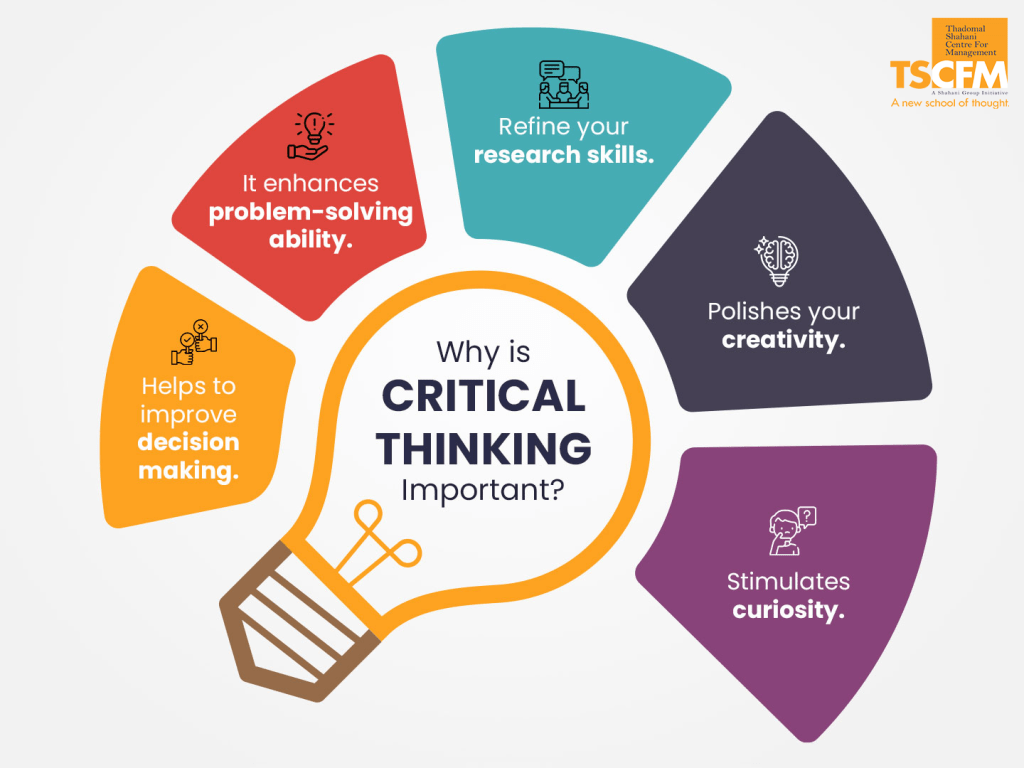
Critical thinking is the ability to analyze information carefully, question assumptions, evaluate evidence, and make logical decisions independently. It allows people to think beyond memorized answers and understand problems more deeply. In today’s rapidly changing world, this ability is becoming more valuable than ever before.
Modern life is filled with complex information, social media influence, artificial intelligence, political opinions, advertising, and endless digital content. People constantly face situations where they must decide what is accurate, trustworthy, useful, or misleading. Memorizing textbook answers may help students pass examinations, but critical thinking helps them navigate real life intelligently.
As technology changes industries and information becomes easier to access, the importance of independent thinking is growing far beyond classroom performance.
Exam Marks Measure Memory but Critical Thinking Measures Understanding
One of the biggest limitations of traditional examination systems is that they often reward memorization more than deep understanding. Students are frequently encouraged to remember formulas, definitions, and textbook explanations because examinations usually focus on reproducing information correctly within limited time periods.
This system can create the impression that academic success depends mainly on memory rather than genuine understanding. Many students learn how to score well through repetition and exam strategies without fully understanding the concepts they study.
Critical thinking works differently. Instead of accepting information passively, critical thinkers ask questions. They try to understand why something happens, how ideas connect, and whether information actually makes sense. This process creates deeper learning because students engage actively with knowledge instead of simply memorizing it temporarily.
For example, a student may memorize scientific facts perfectly for an exam but struggle to apply those ideas in practical situations later. Another student who understands the logic behind the concepts may perform better in real-world problem-solving even if their examination marks are not exceptional.
The same pattern appears outside academics as well. Many professions now require adaptability, analysis, communication, and decision-making rather than only theoretical knowledge. Employers increasingly value people who can solve unfamiliar problems independently instead of simply repeating memorized information.
Technology has made this shift even more important. Information is now available instantly through search engines, online databases, and AI tools. Because facts can be accessed quickly, the real value lies in interpreting information intelligently and using it effectively.
Critical thinking also protects people from misinformation. Social media platforms spread enormous amounts of content every day, including rumors, manipulated information, and emotionally misleading narratives. Individuals who cannot analyze information critically may believe false claims easily or become influenced by emotional manipulation.
Students with strong critical thinking skills are usually better at evaluating evidence, identifying bias, and recognizing weak arguments. They are less likely to accept information blindly simply because it sounds convincing or popular.
Creativity is closely connected to critical thinking as well. Creative problem-solving often requires questioning existing methods and exploring new possibilities. Educational systems focused only on exam performance sometimes discourage this kind of independent thinking because students become afraid of making mistakes or giving unconventional answers.
Fear of failure is another issue created by excessive focus on marks. Many students avoid difficult challenges because they worry about losing grades or appearing unsuccessful. Critical thinkers, however, often treat mistakes as opportunities to learn and improve rather than signs of personal failure.
This mindset becomes extremely valuable in professional life, where innovation and adaptability often matter more than perfect academic records.
Critical Thinking Helps Students Succeed Beyond Classrooms and Exams
The real world rarely provides problems with simple textbook answers. Adult life involves uncertainty, complex decisions, financial responsibilities, relationships, workplace conflicts, ethical dilemmas, and rapidly changing situations. Critical thinking helps people navigate these challenges more effectively because it encourages analysis instead of impulsive reactions.
One area where critical thinking becomes extremely important is career development. Industries are evolving rapidly because of automation, artificial intelligence, and digital transformation. Many future jobs may require skills that do not yet exist fully today. In such environments, people who can learn independently and adapt thoughtfully are likely to perform better than those who depend only on memorized knowledge.
Entrepreneurship is another field where critical thinking plays a major role. Business owners constantly face uncertain situations involving customer behavior, competition, financial planning, and market trends. Success often depends on decision-making, creativity, and strategic thinking rather than academic performance alone.
Communication skills also improve through critical thinking. People who analyze ideas deeply usually express themselves more clearly and participate more thoughtfully in discussions. They learn how to support opinions with logic instead of emotion alone.
Leadership depends heavily on critical thinking as well. Effective leaders must evaluate situations carefully, consider multiple perspectives, and make responsible decisions under pressure. High examination scores alone do not automatically develop these abilities.
Critical thinking also encourages intellectual independence. Students who only focus on marks sometimes become dependent on instructions and fixed answers. They may struggle when situations require original thinking or independent judgment. Critical thinkers, on the other hand, become more comfortable exploring uncertainty and forming conclusions based on reasoning.
This independence becomes especially important in democratic societies where citizens constantly encounter political opinions, advertisements, media influence, and ideological debates. People who think critically are more likely to make informed decisions instead of following trends blindly.
Mental health can also be affected by excessive academic pressure. Many students grow up believing their entire future depends on examination performance. This mindset creates anxiety, fear, and unhealthy competition. While academic achievement matters, reducing personal value entirely to marks can become emotionally damaging.
Critical thinking helps students develop broader perspectives about success and self-worth. They begin understanding that intelligence includes creativity, emotional understanding, problem-solving, adaptability, and communication, not only exam performance.
Another important advantage is lifelong learning. Critical thinkers remain curious because they enjoy understanding ideas deeply. Instead of studying only for examinations, they continue learning independently throughout life. This habit becomes increasingly valuable in a world where continuous learning is essential for career growth.
The Future Will Reward Thinkers More Than Memorization Experts
Educational systems worldwide are slowly recognizing that traditional exam-focused learning may not fully prepare students for future realities. Many schools, universities, and organizations are beginning to emphasize analytical thinking, project-based learning, collaboration, and creativity alongside academic performance.
Artificial intelligence is accelerating this shift. AI systems can already process and retrieve information faster than humans in many situations. This means future human value may depend more on uniquely human abilities such as critical thinking, emotional intelligence, ethical judgment, and creativity.
Jobs based mainly on repetitive memorization or predictable tasks may become increasingly automated. However, professions requiring complex decision-making, innovation, leadership, and human understanding are likely to remain highly valuable.
This does not mean exam marks are meaningless. Academic performance still matters for many educational and professional opportunities. Discipline, consistency, and subject knowledge remain important. However, marks should ideally be viewed as one part of a larger picture rather than the only measure of intelligence or potential.
Students who combine academic knowledge with strong critical thinking abilities usually gain the greatest advantage. They not only understand subjects deeply but also know how to apply ideas in practical situations and adapt to changing environments.
Parents and educators also play important roles in encouraging critical thinking. Students should feel comfortable asking questions, exploring ideas independently, and discussing different perspectives without fear of punishment for incorrect answers. Curiosity should be encouraged rather than treated as distraction.
Reading widely, engaging in discussions, solving real-world problems, and reflecting on different viewpoints all help strengthen critical thinking skills. These habits develop gradually through practice and open-minded learning experiences.
The internet age has created both opportunities and dangers. Knowledge is more accessible than ever before, but misinformation spreads just as quickly. In this environment, the ability to think independently may become one of the most important survival skills for future generations.
Success in modern life increasingly depends on understanding complexity rather than memorizing isolated facts. People who can analyze situations calmly, question assumptions intelligently, and adapt to new challenges often perform better in careers, relationships, and personal growth.
Critical thinking ultimately gives students something that examination marks alone cannot provide: the ability to navigate life thoughtfully and independently. While grades may influence short-term academic opportunities, the ability to think critically shapes how individuals make decisions, solve problems, understand the world, and continue growing throughout their lives.
As education and technology continue evolving, society may gradually move toward valuing not only what students remember, but also how they think.