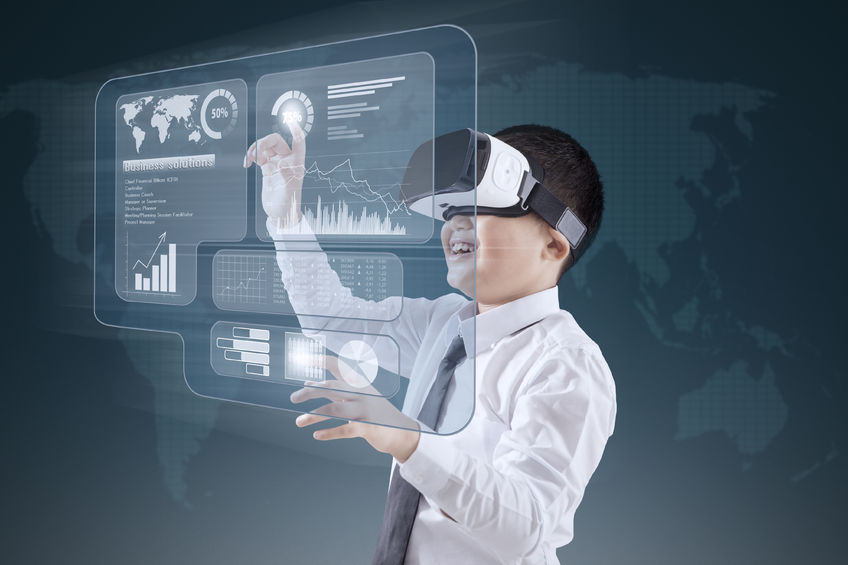
Education is undergoing one of the biggest transformations in human history. For centuries, learning followed relatively similar patterns. Students attended physical classrooms, teachers delivered lessons, textbooks provided information, and examinations measured academic performance. While educational systems evolved gradually over time, the core structure remained largely unchanged for generations.
Today, technology is changing that structure at an extraordinary speed. Artificial intelligence, online learning platforms, virtual classrooms, automation, digital communication, and global internet access are reshaping how people learn and how knowledge is shared. The future of education is no longer limited to schools, universities, or traditional teaching methods. Learning is becoming more flexible, personalized, interactive, and connected to real-world skills.
Students now have access to information from almost anywhere in the world within seconds. A learner sitting in a small town can attend online lectures from global experts, practice languages through AI-powered tools, or study advanced subjects through digital platforms. The idea that education must happen only inside classrooms is gradually disappearing.
At the same time, this technological transformation raises important questions. What will happen to traditional schools and universities? Will artificial intelligence replace teachers? How can students remain focused in highly digital environments? Which skills will matter most in future careers?
Technology is not simply adding new tools to education. It is changing the meaning of education itself. The future may depend less on memorizing information and more on learning how to think critically, adapt continuously, and use technology responsibly.
Technology Is Making Education More Flexible and Personalized
One of the most significant changes technology has brought to education is flexibility. Traditional education systems usually follow fixed schedules, standardized lessons, and classroom-based instruction. While this structure works for some students, others struggle because people learn at different speeds and in different ways.
Technology is helping create more personalized learning experiences. Artificial intelligence and adaptive learning systems can analyze student performance and provide customized lessons according to individual strengths and weaknesses. A student struggling with mathematics may receive additional practice and simplified explanations, while another learner can move ahead more quickly.
This personalization has the potential to reduce one of the biggest problems in traditional education systems: treating all students the same despite differences in learning style, pace, and interests.
Online education is also making learning more accessible globally. Earlier, high-quality education was often limited by geography, economic background, or institutional access. Students living in remote areas or from lower-income families had fewer opportunities compared to those in major cities or expensive schools.
Digital learning platforms are gradually reducing these barriers. Students can now access courses, tutorials, certifications, and educational communities from home. This democratization of knowledge may create greater educational equality over time, although internet access and digital infrastructure still remain challenges in many regions.
Hybrid education models are becoming more common as well. Instead of choosing entirely between online and offline learning, many institutions are combining both methods. Students may attend physical classrooms for discussions and collaboration while using digital platforms for assignments, recorded lessons, and personalized practice.
Technology is also making learning more interactive. Virtual reality, simulations, and AI-powered educational tools can create immersive learning experiences that go beyond textbooks. Medical students may practice procedures virtually, history students may explore historical environments digitally, and science learners may conduct simulations that would otherwise be difficult or expensive in traditional classrooms.
The future of education may also involve more lifelong learning rather than education ending after graduation. Industries are changing rapidly because of automation and artificial intelligence, meaning workers will likely need to update skills continuously throughout their careers.
Technology supports this shift by allowing adults to learn flexibly alongside work and personal responsibilities. Short courses, online certifications, and self-paced learning may become increasingly normal for professionals across industries.
Another important change is the growing emphasis on skills rather than degrees alone. Employers increasingly value practical abilities, adaptability, and problem-solving skills. Technology-based education often focuses more directly on real-world applications and project-based learning compared to purely theoretical instruction.
Artificial Intelligence and Automation Are Changing Educational Priorities
Artificial intelligence is likely to become one of the most influential forces in future education systems. AI tools can already generate explanations, summarize information, assist with language learning, provide instant feedback, and personalize educational content. As these technologies improve, their influence on classrooms and learning environments will continue expanding.
However, the rise of AI also changes what students actually need to learn. In the past, education focused heavily on memorization because access to information was limited. Today, information is instantly available through search engines and AI systems. Because of this, future education may prioritize skills that machines cannot easily replace.
Critical thinking, creativity, emotional intelligence, communication, leadership, and ethical reasoning are becoming increasingly important because they remain deeply human abilities. Students who only memorize information may struggle in a world where AI can retrieve facts instantly.
Problem-solving skills will also become more valuable. Future workplaces may depend heavily on collaboration between humans and intelligent systems. Employees will need to analyze situations, make decisions, and adapt to unfamiliar challenges instead of simply following repetitive processes.
Teachers themselves may experience major changes in their roles. Technology is unlikely to replace teachers entirely because education involves emotional support, mentorship, motivation, and human connection. However, educators may shift from being primary information providers to becoming facilitators and guides who help students interpret knowledge and think independently.
This shift could improve classroom experiences if technology handles repetitive administrative tasks while teachers focus more on discussion, creativity, and individual support.
Assessment systems may also change significantly. Traditional examinations often measure memorization and short-term recall. Future education systems may place greater emphasis on practical projects, collaboration, creativity, and real-world problem-solving.
At the same time, technology introduces serious challenges that educational systems must address carefully. One major issue is distraction. Students today already face constant interruptions from social media, entertainment platforms, and digital notifications. Maintaining concentration in technology-rich environments may become increasingly difficult.
Another concern is overdependence on AI tools. If students rely entirely on automated systems for answers, they may weaken independent thinking and deep learning habits. The challenge for future education will be finding balance between technological assistance and genuine intellectual development.
Data privacy and ethical issues are also becoming important. Educational technologies collect large amounts of student information, raising questions about security, surveillance, and responsible data usage.
Economic inequality remains another challenge. While technology can expand access to education, not everyone has equal access to high-speed internet, modern devices, or digital resources. Without proper investment, technological education systems may unintentionally increase existing inequalities.
The Future of Education Will Require Human Skills Alongside Technology
Despite rapid technological progress, the future of education will likely depend not only on digital tools but also on preserving essential human qualities. Technology can provide information quickly, but education is about far more than information alone.
Human interaction remains critical for emotional growth, collaboration, empathy, and social development. Students learn not only from lessons but also from discussions, teamwork, mentorship, and shared experiences. Future educational systems will need to balance technological efficiency with meaningful human connection.
Creativity may become one of the most valuable future skills because innovation often depends on imagination and original thinking. While AI can assist with generating ideas, human creativity remains deeply connected to emotion, culture, and personal experience.
Communication skills will also remain essential. In increasingly global and digital workplaces, people must know how to express ideas clearly, collaborate across cultures, and build relationships effectively. Technology may change communication methods, but the need for strong interpersonal ability will likely continue growing.
Adaptability will become equally important because future careers may change multiple times during a person’s life. Students will need to become comfortable learning continuously and adjusting to new technologies, industries, and social realities.
The idea of lifelong education may eventually replace the traditional model where learning ends after university graduation. People may regularly return to education throughout adulthood to develop new skills and remain professionally relevant.
Educational systems may also become more interdisciplinary. Instead of separating subjects rigidly, future learning may combine technology, creativity, communication, psychology, business, and ethics more naturally because real-world problems are rarely limited to single disciplines.
Another likely change is the growing importance of self-learning. Students already have access to vast educational resources independently through the internet. Future education may focus more on teaching learners how to think critically, research effectively, and learn independently rather than simply delivering information.
Parents and educators will play important roles in guiding students through this transformation. Young people must learn not only how to use technology, but also how to use it responsibly and thoughtfully. Digital literacy, ethical awareness, and mental balance may become essential parts of education itself.
Technology-driven education also creates opportunities for more inclusive learning environments. Students with disabilities, language barriers, or non-traditional educational paths may benefit significantly from adaptive technologies and flexible learning systems.
The future of education is unlikely to be fully digital or fully traditional. Instead, it will probably combine technological innovation with human guidance in ways that make learning more accessible, personalized, and practical.
As the world becomes increasingly shaped by artificial intelligence, automation, and global digital networks, education must prepare students not only for jobs, but also for thoughtful participation in a rapidly changing society. The students who succeed in the future may not simply be those who memorize the most information, but those who know how to think independently, adapt continuously, communicate effectively, and use technology wisely while remaining deeply human.
Leave a Reply